
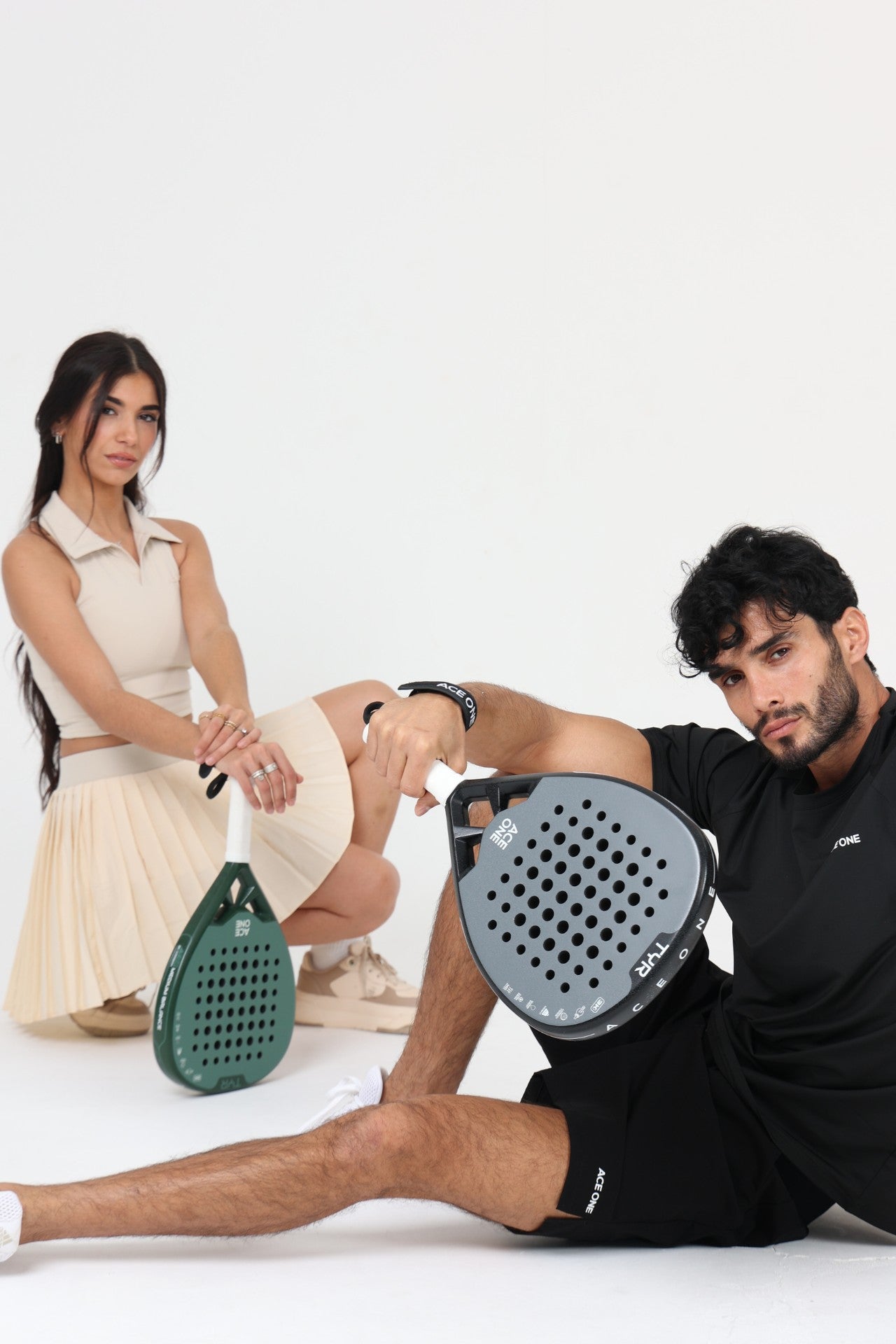
Pick up your padel racket and look for the damage. No cracks. No chips. The frame is straight, the bumper is intact, the grip is fine. By every visible test, the racket is healthy. And yet your smashes have gone soft, your blocks feel dead, and the ball comes off the face with a flat little thud instead of a snap. Nothing looks wrong. Something is very wrong. The engine of your racket, the EVA core hidden under the carbon, has been dying quietly for months.
This is the most misread piece of gear in padel. Players replace strings on a tennis racket because they can see them fray. A padel racket gives you no such warning. It fails on the inside first, where you cannot look, and most players keep swinging a dead frame for half a season because it still looks new. Let us fix that. Here is how to read EVA core fatigue, how long a racket actually lasts, and how to know the exact moment it is time to replace it.
TL;DR
- The core dies before the frame breaks: the EVA foam fatigues invisibly, losing rebound long before a single crack appears.
- Lifespan is about hours, not years: heavy play (4-5x a week) burns a core in 3-5 months; a once-a-week player can get 12-24 months.
- Five honest signs: dull thud sound, shrinking sweet spot, more vibration, lost pop on smashes, and visible cracks near the holes.
- You cannot un-fatigue foam: a dead core is permanent. Maintenance slows the clock, it does not turn it back.
- Replace on feel, not on looks: when the ball stops snapping off the face, the racket is done, no matter how clean it looks.
Your racket does not break. It dies quietly.
A padel racket is a sandwich: two carbon faces, a foam core in the middle, a frame around the edge. The carbon and the frame are the parts you can see, and they are the parts that almost never decide when a racket is finished. The part that decides is the one you cannot see. The EVA core is what stores and returns energy on every hit. It is the trampoline. When it tires, the trampoline sags, and no amount of clean carbon will give you that snap back.
EVA is a closed-cell foam, the same material family used in running-shoe midsoles, and material scientists have studied exactly how it fatigues. Peer-reviewed work on closed-cell elastomeric foam under repeated compression shows the failure mechanism plainly: the tiny gas-filled cell walls inside the foam buckle, then tear, then flatten permanently along the axis of impact. The result is what engineers call compression set, a permanent loss of thickness and springiness that the foam never recovers. A separate study on the compression fatigue of EVA midsole foams cycled the material between 5% and 30% compression for hundreds of thousands of cycles and tracked the cell walls collapsing under a microscope. Your padel core lives the same life, one ball at a time.

This is the big idea, and it is the one most players get backwards. The frame is not what wears out. The core is. The frame usually outlives the foam inside it. That is why a racket can look showroom-fresh and still be, in every sense that matters to your game, dead.
How long does a padel racket actually last?
The honest answer is hours, not calendar months, because a core fatigues by the number of impacts, not by the date on the receipt. That said, the padel world has settled on a clear consensus once you convert hours into a weekly habit. Here is where the major gear sources agree:
| Play frequency | Optimal performance | What kills it first |
|---|---|---|
| Casual (1x / week) | 12-24 months | Slow compression set, often replaced for boredom before death |
| Regular (2-3x / week) | 6-12 months | Steady core fatigue, sweet spot shrinks mid-season |
| Heavy (4-5x / week) | 3-5 months | Rapid compression set plus impact cracks near the holes |
| Professional | 2-4 weeks | Maximum impact load every session, zero tolerance for lost pop |
One number gets quoted a lot: roughly 10,000 hits, or about 50 to 70 hours of competitive play, before the EVA cell structure starts to rupture on a microscopic level. Treat that as a useful rule of thumb rather than a hard law, because court conditions, ball pressure, string of your strokes and how flush you hit all move the dial. The frequency brackets above are the consensus you can plan around.
Five signs your EVA core is gone
You do not need a lab. Your hand and your ear already have the data. Run this checklist honestly, and if you tick three or more, the core is done.
- The sound goes dull. A live core gives a crisp, slightly high crack. A dead one returns a flat, woody thud. The sound is the fastest tell because fatigued foam absorbs energy instead of returning it.
- The sweet spot shrinks. Compression set hardens the center first. Shots that used to feel clean now only feel right on a tiny patch, and everything else stings.
- Vibration climbs. A healthy core damps shock. As the cell walls collapse, more of every impact travels into your wrist and elbow. New aches with the same racket are a warning.
- The pop disappears on smashes. Power shots are where lost rebound shows most. If your bandeja and smash suddenly need more arm for the same result, the trampoline has sagged.
- You see cracks near the holes or frame. This is the only visible sign, and it is the last to arrive. Cracks between the drilled holes or along the frame mean replace now, not soon.

The wrong way to read a dead racket
Most players who lose their pop blame the wrong thing, spend money in the wrong place, and keep playing with a dead engine. Three traps to avoid:
- Trap 1: blaming your form. You add an extra hour of drilling because your smash went flat, when the smash was fine and the core was gone. A dead racket makes a good player feel like they are regressing. Test the gear before you rebuild the stroke.
- Trap 2: fixing the cosmetics, not the core. A fresh overgrip and a new bumper make the racket look and feel new in the hand for one rally. They do nothing for compression set. You cannot grip your way out of a dead core.
- Trap 3: chasing a more expensive racket too early. If your current frame is only four months old and lightly played, the answer is not a pricier model, it is better maintenance. Save the upgrade budget for when the core has genuinely earned its retirement.
The honest limit here: feel is subjective, and a slow fade is hard to notice from inside. The reliable trick is to keep one reference. Hit a few balls with a friend's newer racket of a similar profile, then yours. The gap you feel in two minutes is the months of fatigue you stopped noticing.
How to make your padel racket last longer
You cannot stop a core from aging, but you can slow it down a lot. None of this reverses compression set, it just buys you weeks before it starts. Follow these steps:
- Control the temperature. Never leave your racket in a hot car or a freezing boot. Heat softens EVA and accelerates compression set; cold makes the foam and carbon brittle. Store it indoors at room temperature.
- Use a protector and a proper bag. A frame protector takes the edge hits that crack the frame, and a padded racket bag stops the knocks that start micro-fractures. Both are cheaper than a new racket.
- Rotate two rackets if you play heavy. If you are on court four or five times a week, alternating two frames roughly doubles the calendar life of each by halving the impacts per core.
- Refresh your overgrip on schedule. A fresh grip will not save the core, but it keeps your contact honest, so you stop over-hitting to compensate, which is itself a source of extra core load.
- Play the right ball pressure. Flat, heavy, waterlogged balls force you to swing harder for the same depth, loading the core more per shot. Fresh balls are easier on your frame than you think.
If you want the full maintenance picture, our padel consumables guide maps how grips, balls and protectors work together, and our frame protector install guide walks the single highest-value habit step by step.
The Ace One Padel Verdict
Here is the truth that frees up your decision. A padel racket does not retire when it breaks. It retires when it stops breaking the ball. The crack you are waiting for may never come, because the frame is happy to outlive the core by a year. So stop reading the carbon and start reading the snap.
If you play once a week and your racket is under a year old with its pop intact, you are fine, keep playing. If you are a regular and the sound has gone dull, the sweet spot has shrunk, and your smashes need more arm, the core has spoken, and it is time. When you do replace, match the new frame to how you actually play: a Soft EVA, 3K-carbon control frame like the TŸR in our 3K Carbon collection for comfort, dwell and a kinder ride on the elbow, or a rigid 12K-carbon frame like the Cøre for explosive power and attack. You can compare the whole range in the Ace One Padel rackets collection, and if you want to understand the foam itself before you choose, our soft versus hard EVA core guide breaks down what you are really buying.
At Ace One Padel, we have broken down a lot of dead rackets, and the lesson is always the same. The frame is the costume. The core is the engine. The clean carbon tells you nothing. The flat thud tells you everything.
Frequently asked questions
Can a dead padel racket core be repaired or restored?
No. Compression set is permanent. Once the EVA cell walls have flattened and torn, the foam cannot recover its original rebound. Storage and protection slow the aging, but nothing restores a fatigued core.
How do I know if my padel racket is dead or if it is just me?
Borrow a similar but newer racket and hit a few balls, then switch back to yours. If the newer frame snaps the ball off the face noticeably better with the same swing, your core has fatigued. If they feel the same, the gear is fine and the issue is form or fitness.
Does an expensive padel racket last longer than a cheap one?
Not necessarily. Price tracks carbon grade, shape and feel more than raw lifespan. A rigid 12K frame may hide fatigue longer, while a Soft EVA frame shows its long dwell from day one. Both fatigue with hours of play, and how you store and protect the racket matters more than the price tag.
How many hours of play before a padel racket loses its pop?
A widely cited estimate is around 10,000 hits, roughly 50 to 70 hours of competitive play, before the EVA core starts to rupture microscopically. In weekly terms, that is 3-5 months for heavy players and 12-24 months for casual ones.
Share:
Padel Volley: When to Block and When to Punch (2026 Net-Play Guide)
Padel Recovery and Stretching: The 15-Minute Cool-Down That Actually Helps (2026 Guide)