
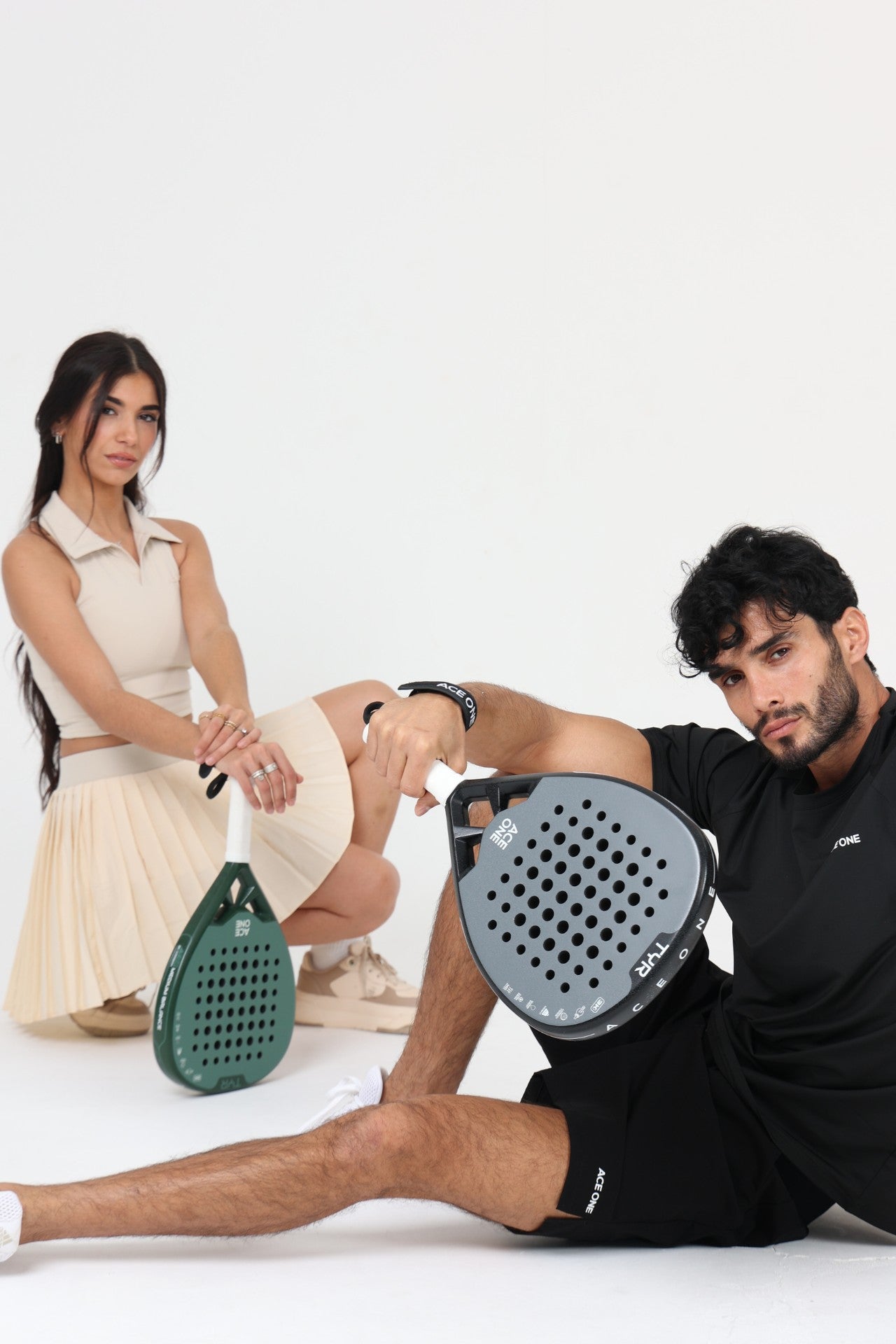
You finished the match, you stretched for two minutes by the net, and the next morning your calves still scream when you get out of bed. Here is the uncomfortable truth about padel recovery: that stretch was never going to stop the soreness. The science is surprisingly blunt about it. But that does not make the cool-down useless. It just means most players are recovering for the wrong reason.
Good padel recovery is not about feeling nothing tomorrow. It is about being able to play again tomorrow, with the same shoulder rotation, the same wrist snap, and an elbow that is not quietly building toward an injury. This is the 15-minute routine that actually earns its place, and the myth it is time to retire.
TL;DR
- Stretching does not erase soreness: a meta-analysis of controlled trials found post-exercise stretching has no meaningful effect on muscle soreness at 24, 48 or 72 hours.
- The cool-down still matters: it lowers your heart rate safely, restores range of motion, and keeps your shoulders and forearms ready for the next match.
- 15 minutes, four steps: easy movement, dynamic mobility, static stretch (20 to 30 second holds), then refuel.
- Protect the elbow first: the elbow is padel's most-injured joint, so the forearm stretch is the one you never skip.
- Recover to play again, not to feel nothing tomorrow. That single shift fixes most amateur recovery habits.
What padel recovery actually does (and what it does not)
Let us deal with the myth first, because it changes everything else. The belief that a good post-match stretch cancels out tomorrow's stiffness is one of the most repeated ideas in amateur sport. It is also wrong.
A 2021 systematic review and meta-analysis of randomised controlled trials looked at exactly this question. The conclusion was clean: there was no meaningful effect of post-exercise stretching on delayed-onset muscle soreness at 24, 48 or 72 hours when compared with simply resting. The same was true for strength recovery. The micro-damage in your muscle fibres that makes you ache is a repair process. Stretching does not fast-forward it.
So why bother? Because soreness was never the right scoreboard. A padel cool-down does four things that genuinely help, and none of them is about the ache.
- It brings your heart rate down on purpose. Going from a three-set war to sitting in the car spikes blood pooling and leaves you light-headed. A gradual wind-down protects your cardiovascular system.
- It buys back range of motion. Warm muscles that you move through their full range stay supple. That is the rotation your bandeja and your serve depend on next time.
- It keeps your forearm honest. Padel's repetitive wrist and elbow load is the real long-term threat, and gentle forearm work after play is your cheapest insurance.
- It gives your head a stop signal. The walk, the breathing, the stretch tell your nervous system the match is over. That is real recovery too.
At Ace One Padel, we have broken down enough warm-ups and cool-downs to say it plainly: the cool-down is not a soreness eraser. It is a readiness routine.
The 15-minute padel cool-down, step by step
This is the whole routine. It takes the time of one coffee, and you do it before you sit down, not after. Order matters more than effort here.

Step 1: three to five minutes of easy movement
Walk the court, jog slowly, or shadow a few soft swings. The goal is to let your heart rate drift down instead of dropping off a cliff. This is also when your muscles are still warm, which is exactly when stretching is safe and useful.
Step 2: dynamic mobility for the joints that worked
Arm circles and slow shoulder swings, a few hip openers, gentle spinal rotations. Padel loads the shoulders, lower back and hips hard, so move them through their range before you hold anything still. Thirty to sixty seconds per area is plenty.
Step 3: static stretching, 20 to 30 seconds per hold
Now you hold. Calves, quads, hip flexors, lower back, shoulders and, above all, forearms. Hold each for 20 to 30 seconds, breathe, and never bounce or stretch into pain. You are not chasing soreness reduction here, you are protecting tomorrow's range of motion.
Step 4: refuel and rehydrate
Within the first hour, take on fluids and a mix of carbohydrate and protein. The old "30-minute anabolic window" is real for glycogen but less rigid than it was once sold: for a weekend player, what you eat across the whole day matters more than hitting an exact stopwatch. Drink, eat something sensible, move on.
Your forearm and elbow: padel's most-injured joint
If you only protect one thing after padel, protect the elbow. Across injury surveys, the elbow is the most frequently reported site, with lateral epicondylitis (the same mechanism as tennis elbow) leading the list. It is an overuse problem, built one slightly mistimed backhand at a time.
Two habits move the needle. First, the forearm stretch from Step 3: arm straight out, palm down, gently pull the fingers back, then repeat palm up. Second, the gear that sits between your hand and the ball. A frame with a softer core and a fresh, tacky grip lets more of the impact die in the racket instead of travelling up your tendon.

This is why our TŸR line uses a 3K carbon face over a Soft EVA core: more dwell time, more absorption, less of the high-frequency buzz that aggravates a sore elbow. It will not undo bad technique, and we will not pretend it cures tendinitis. But a forgiving frame plus a maintained grip is a genuine load-reducer, and it pairs naturally with the forearm work above. If your overgrip is slick, replace it before your next session.
The 48-hour recovery window
Soreness peaks 24 to 48 hours after a hard match, not on the night itself. Knowing the timeline stops you from panicking on day two and from over-training when you actually feel fine. Here is what the window really looks like.
The takeaway from the timeline is simple. Your cool-down happens long before your soreness arrives, which is the clearest visual reason stretching cannot reach forward two days and switch off an ache it never touches. What helps on day two is gentle movement, hydration and sleep, not a heroic stretching session.
The wrong way to recover (three traps)
Most bad recovery is not laziness, it is good intentions in the wrong order. These are the three traps we see most often on court.
- Trap 1: stretching cold, right after the last point. Dropping into deep static holds the second the rally ends, before any wind-down, stretches muscles that are no longer warm and skips the heart-rate glide. Move first, hold second.
- Trap 2: trusting the stretch to cancel tomorrow. This is the myth the meta-analysis kills. If you stretch only because you believe it deletes soreness, you will feel cheated on day two and quit the habit. Stretch for range of motion and the elbow, and you will keep doing it.
- Trap 3: skipping the cool-down to rush off. Straight from match point to the car park is the most expensive shortcut in padel. You lose the heart-rate glide, the mobility work and the refuelling window in one go.
Recovery by player profile
How much recovery you need scales with how much you play. Match the routine to your week instead of copying a touring pro's protocol.
| Player | Cool-down | Stretch focus | Between sessions |
|---|---|---|---|
| Weekend player (1 to 2 / week) | 10 to 15 min, every time | Calves, hips, forearms | Full rest, light walk |
| Regular amateur (3 to 4 / week) | 15 min, non-negotiable | Add shoulders, lower back | 1 to 2 light or rest days |
| Competitor (5+ / week) | 15 to 20 min + mobility | Full body, daily forearm care | Planned deload, sleep priority |
Notice the elbow appears in every row. That is deliberate. Whatever your volume, the forearm is the joint that punishes neglect first, and the one comfortable kit keeps in check. A breathable set you actually want to cool down in helps too, which is why our women's and men's activewear are cut to move in, not just to play in.
The Ace One Padel Verdict
Recovery is the one part of padel where doing less, in the right order, beats doing more in the wrong one. Stretch because it keeps you mobile and protects your elbow, not because you think it deletes tomorrow's ache. It does not, and chasing that myth is why so many players give up on the cool-down entirely.
A racket does not recover for you, but the right one asks less of your arm in the first place. Cool down to come back, not to feel nothing. Recover for the next match, not for the mirror. And protect the elbow today, because it is the one bill padel always sends late.
Want the other half of this routine? Read our padel warm-up routine to prepare the same joints before you play, and our breakdown of soft versus hard EVA cores to understand how much impact your frame really hands to your forearm.
Frequently asked questions about padel recovery
Should I stretch before or after padel?
Both, but differently. Before play, use dynamic mobility to warm up. After play, use static stretching on warm muscles to maintain range of motion. Holding long static stretches on a cold body before a match can briefly reduce power, so save the long holds for the cool-down.
Does stretching after padel prevent muscle soreness?
No. A meta-analysis of controlled trials found post-exercise stretching has no meaningful effect on soreness at 24, 48 or 72 hours. Stretch to protect range of motion and your elbow, not to erase the ache. Gentle movement, hydration and sleep do more for soreness.
How long should a padel cool-down be?
About 10 to 15 minutes: three to five minutes of easy movement, a minute or two of dynamic mobility, then static stretches held for 20 to 30 seconds each. Add five minutes if you play five or more times a week.
What is the best stretch for padel elbow?
The forearm stretch. Extend your arm, palm down, and gently pull the fingers back to lengthen the outer forearm, then repeat with the palm up. Hold each for 20 to 30 seconds. Pair it with a softer-core racket and a fresh grip to reduce the vibration load that aggravates the tendon.
Share:
When Is a Padel Racket Dead? Reading EVA Core Fatigue and When to Replace It (2026)
The Padel Smash, Decoded: Why Power Comes From the Ground, Not Your Arm