
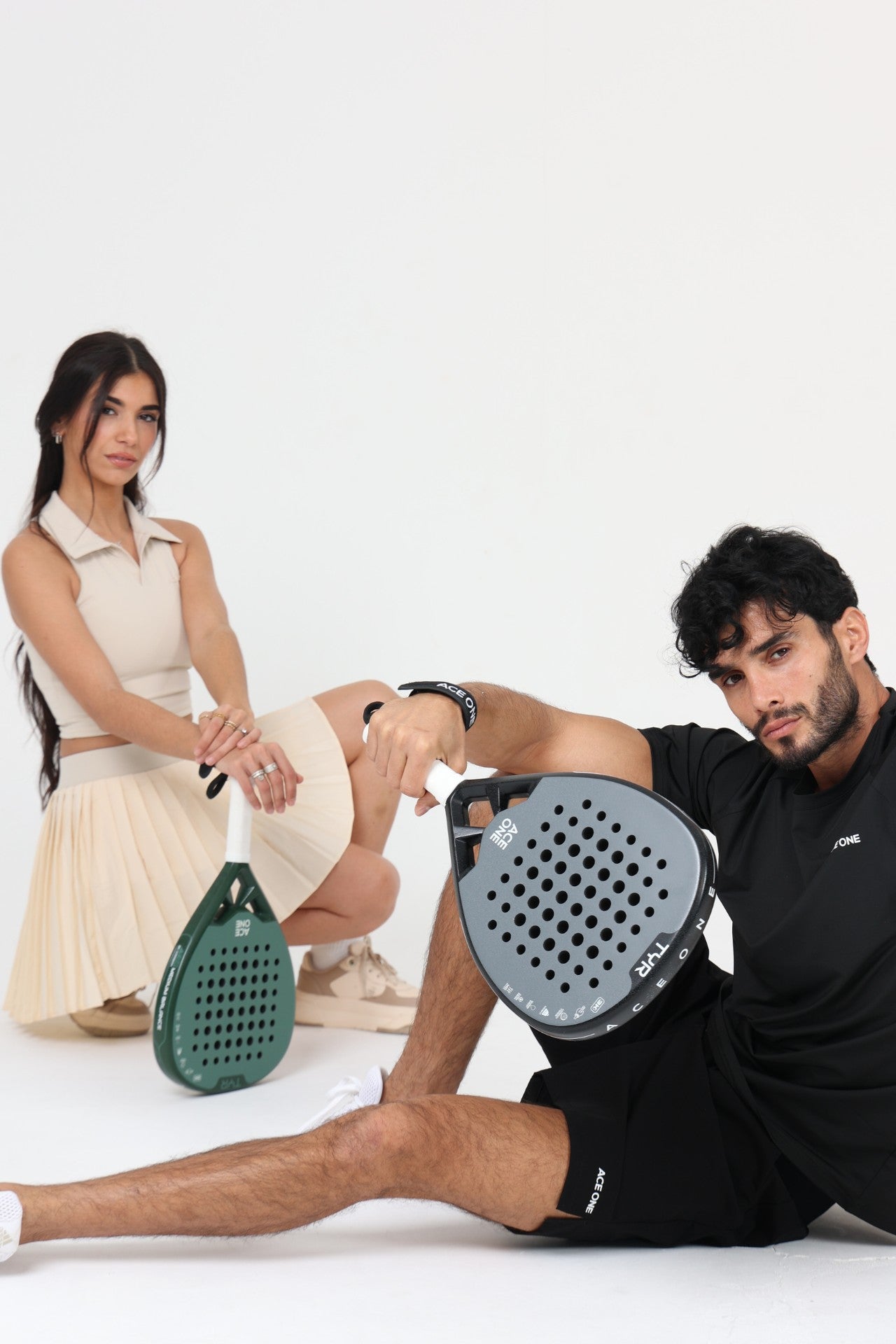
Premier Padel Asunción P2 2026: The South American Swing Opens With a 150-Point Race and a Returning Stupa-Lebrón
Paraguay hosts the first stop of the 2026 Premier Padel South American swing this week, and it could not have landed at a more decisive moment in the season. Galán and Chingotto lead the men's race by exactly 150 points. Coello and Tapia just lost a P2 final they were favored to win. Stupaczuk returns from a three-week injury layoff next to Lebrón. The women's race is even tighter, with Triay and Brea defending a 200-point lead after losing three consecutive finals to Josemaria and González. The Asunción P2 2026 is not a routine stop on the calendar. It is a leverage point.
- The Asunción P2 2026 runs May 3 to 10 in Paraguay, the first stop of the South American swing, with €264,534 in total prize money.
- Galán and Chingotto lead the men's race 3,070 to 2,920 over Coello and Tapia after Brussels, a 150-point gap that one P2 final can erase.
- Stupaczuk and Lebrón return from a three-tournament absence and re-enter the draw seeded third, a wildcard for every higher seed.
- The women's race is at 200 points, with Triay and Brea ahead despite losing three back-to-back finals to Josemaria and González.
- The result here resets the table for Buenos Aires P1 (May 11 to 17) and the rest of the South American leg.

What the Asunción P2 2026 actually is
The Asunción P2 is a P2-tier Premier Padel tournament, second only to the four annual Majors and the eight P1 stops in points and prestige. For 2026 it sits at a calendar bridge between the European P2 spring (Newgiza, Brussels) and the South American clay-style swing that will reshape the year-to-date table by mid-May.
Total prize money: €264,534. Men's main draw: 28 players (22 direct acceptances, 4 qualifiers, 2 wildcards). Women's main draw: 24 players (19 direct, 4 qualifiers, 1 wildcard). Qualification runs Sunday May 3 through Tuesday May 5. Main draw begins Tuesday May 5, semi-finals Saturday May 9, finals Sunday May 10. Broadcast: Premier Padel's official YouTube up to the quarter-finals, then Red Bull TV from the semis on. Confirmed by the FIP official tournament page.
The men's race after Brussels: a 150-point window
Brussels P2 reshaped the top of the men's table in two ways. Galán and Chingotto lost in the semi-finals to Lebrón and Augsburger, but they protected their race lead because Coello and Tapia were also stopped one round later in the final. Lebrón and Augsburger took the title and 600 points, leaping into a tier-3 lock at 1,815 points each. Stupaczuk missed the entire tournament with the injury he had announced before the Qatar Major.
The race standings going into Asunción look like this:
| Pair | Race 2026 points | Gap to lead | Asunción tier |
|---|---|---|---|
| Galán / Chingotto | 3,070 | leader | Seed 1 |
| Coello / Tapia | 2,920 | -150 | Seed 2 |
| Stupaczuk / Lebrón | ~1,800 | -1,270 | Seed 3 (back from injury) |
| Lebrón / Augsburger (split) | 1,815 each | -1,255 | Reformed pairs |
| Yanguas / Stupa (Brussels SF) | ~1,550 | -1,520 | Re-paired with new partners |
The visual of the gap matters. The four pairs are not on the same scale. Two pairs are fighting for the top, the rest are fighting for tier 3.
Three scenarios shape what happens by Sunday May 10. If Coello and Tapia win Asunción and Galán and Chingotto fall in the quarter-finals or earlier, the race lead flips. If both pairs reach the final, the gap stays near 150 either way. If Stupaczuk and Lebrón reach the final, they jump back into the meaningful chase ahead of the South American swing's bigger stops. None of these are unlikely; all three have happened on this tour in 2026 already. We covered the structural mechanics in our 2026 Premier Padel race breakdown.
The Stupa-Lebrón return: three weeks off changes a draw
Franco Stupaczuk withdrew from the Qatar Major and the Brussels P2 with the injury he announced on his social channels in early April. Lebrón temporarily paired with Augsburger and won Brussels with him. That is the context Asunción inherits: Stupa is rested, Lebrón is in form, and the pair is officially back together as the third seed.
Three weeks without competitive padel does two things to a top-3 pair. It restores a body that had been pushed every week for nearly four months. It also adds match-rust that no training can fully simulate, especially on the South American clay-style courts that demand longer points and more grass-style sliding adjustments. Both effects are real; the net is rarely zero. The return reports from Padel Magazine note that Stupa's first practice sessions back were short and conservative, which is the sensible protocol but also a tell.
For the draw, the practical consequence is that seeds 4 through 8 just inherited a much harder bracket than they did in Brussels. Yanguas, who reached the Brussels semi-finals with Stupa as a temporary partner, is now back with a different teammate and faces a top-3 pair he was just defeating two weeks ago.
The women's race: 200 points and three consecutive finals
The women's table tells a strange story. Triay and Brea lead the 2026 race at 3,120 points, exactly where the world #1 pair should be. Josemaria and González sit at 2,920 points, 200 behind. And yet Josemaria and González have won the last three finals against Triay and Brea, including the Brussels P2 final 7-5 6-2. The race lead is a 200-point cushion built earlier in the year that the head-to-head no longer supports.
For Asunción, that produces a tournament where the world's number 1 pair on paper has to defend a lead they are losing in real time. If Josemaria and González win again here, the race lead can flip in a single P1 stop afterwards. Sánchez and Ustero at 2,080 points sit a clear tier behind, but they remain dangerous if either of the top pairs slips early.
This is exactly the kind of mid-season inflection point the Star Point format is designed to amplify. We covered why deuces feel heavier in 2026 in our explainer on the Star Point rule: every advantage point now carries the weight of a closing rally, which favors the pair with sharper finishing under pressure. Josemaria and González have been winning those rallies.
Why the South American swing demands different gear
South American padel courts trend slower than European indoor venues. Higher humidity, slightly grittier turf compounds, and the altitude of Paraguay's outdoor venues all stretch points by half a second on average. That half second matters. Pros bring different rackets, different ball pressure, and different overgrip stacks for the South American leg, even when the brand and model stay the same.
For finishing pairs, the response is usually a stiffer, more powerful frame to compensate for slower courts that swallow flat shots. The Cøre 12K is the kind of frame that earns its place at this stop: 12K weave for rigidity, harder EVA core for explosive ball exit, head shape oriented to attack at the closing zone. We broke down the physics of 12K versus 3K in our 3K vs 12K carbon guide.
For builders and right-side players, the slower court rewards control and dwell. The TŸR collection in 3K + Soft EVA fits that brief: more time on the strings, more tolerance, more confidence in the long rally that South American courts produce. Weight and balance matter more here too: head-light setups give the lateral coverage these courts demand. We covered the trade-off in our racket weight and balance guide.

And there is the bag. South America in May is heat-and-humidity territory. EVA cores soften above 30°C; a thermal-lined compartment is the simplest equipment investment a touring player can make. We covered exactly what the touring pros pack in our 2026 pro travel bag checklist, and the PRO-LINE backpack is built for that exact use case.
How to follow the Asunción P2 2026
The full schedule is now public. Use it to plan your viewing around the rounds that actually shape the table.
- Sun May 3 to Tue May 5: Qualifying. Two qualifying wildcards each side make the bracket 32 men and 24 women in main draw.
- Tue May 5 (16:00 local) to Wed May 6: First round men. First round women begin Wed May 6 morning.
- Thu May 7: Round of 16. The seeds enter, including all top-4 men's pairs.
- Fri May 8: Quarter-finals. The most decisive day for the race math.
- Sat May 9 (14:00 local): Semi-finals. Premier Padel YouTube cuts off here; Red Bull TV takes over.
- Sun May 10 (16:00 local): Finals. Women's final first, men's final second.
The key matchups to circle: any quarter-final containing Galán and Chingotto, any semi-final with Stupaczuk and Lebrón as the lower seed, and the women's draw quarter or semi between Triay and Brea and Josemaria and González if the seeding holds. If those three landmarks all play out, the year-to-date race table is reshaped before Buenos Aires P1 ten days later.
The Ace One Padel Verdict
The Asunción P2 2026 is not a routine tournament. It is the first stop where every top pair has something fragile to defend: Galán and Chingotto, a 150-point race lead that one final can erase. Coello and Tapia, the right to be called the chasing pair instead of the upset pair. Stupaczuk and Lebrón, three weeks of rust against a tour that does not pause. Triay and Brea, a paper #1 ranking against three consecutive final losses to Josemaria and González. The numbers in the race table are not the ranking. The ranking is what these next seven days produce.
Two ways to remember it. First the inversion: the Asunción P2 is not the start of the South American swing. It is the end of the European spring, audited in full. Second the tricolon: fifty points decides who is favored. One hundred fifty points decides who is leading. Six hundred points decides who is the world number one. Two of the three are negotiated in Asunción.
Share:
Padel Grip Size Explained: Why You Do Not Choose It, You Tune It (2026 Guide)
Padel Third Ball Positioning: Where the Point Is Actually Won (2026 Guide)