
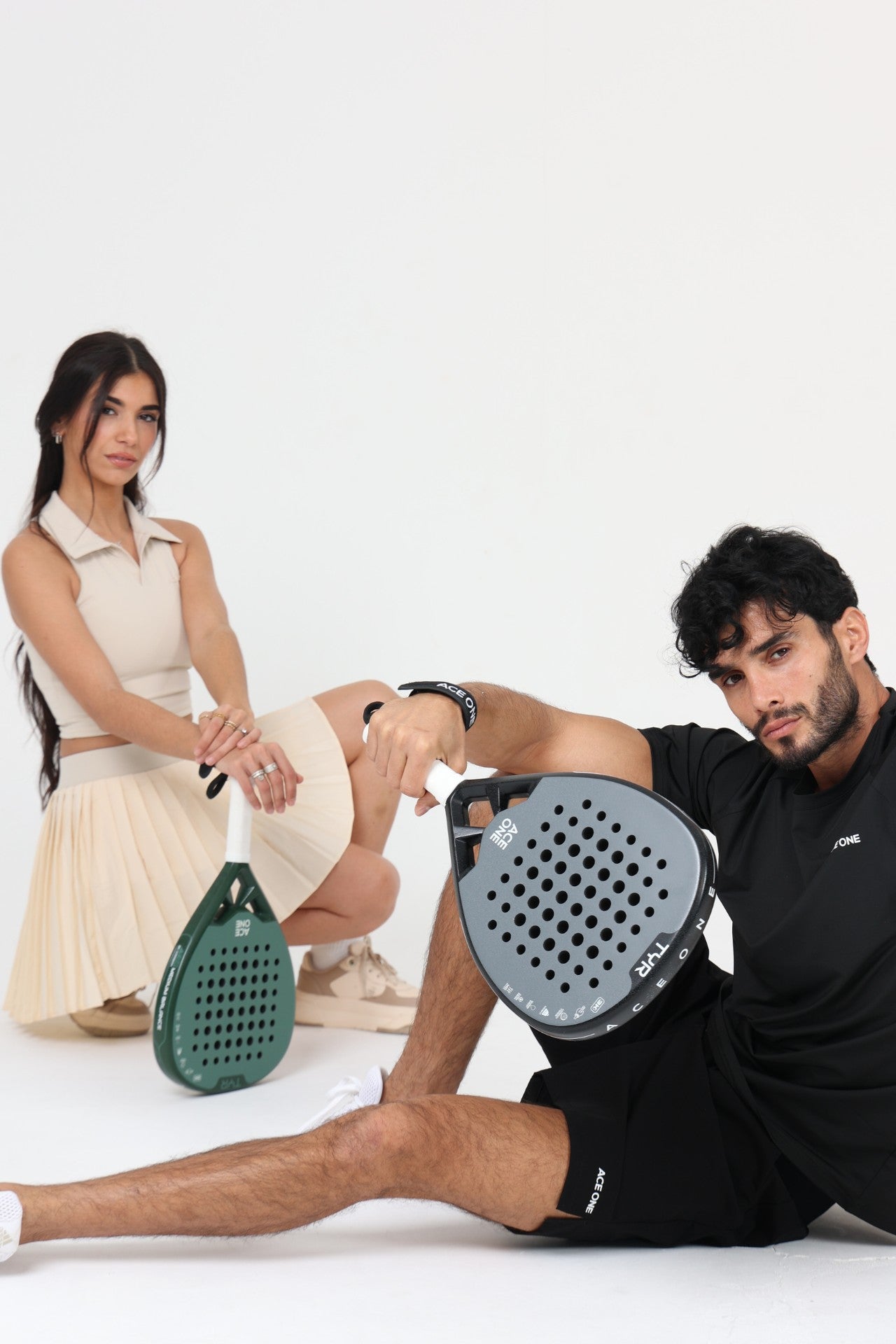
Watch anyone in their first year of padel and you will see the same picture: a big backswing, a hunt for winners, and two feet glued to the back wall. It feels productive. It quietly loses matches. The good news is that the common padel mistakes holding beginners back are habits, not talent limits, and every one of them has a fast, concrete fix.
Padel is not tennis with walls. The court is small, the glass keeps the ball alive, and raw pace usually comes straight back at you. Below are the six mistakes that cost beginners the most points, ranked by how much they hurt, each with the correction that flips it.
TL;DR
- The root cause: beginners bring tennis instincts (swing hard, stay back). Padel rewards position and patience instead.
- The biggest leak: refusing the net. In pro play, over 80% of winning points are made from the attack position, not the baseline.
- Stop flat-smashing: the back glass hands your power straight back. A controlled bandeja keeps you at the net and in charge.
- Fix your position: hold near the service line, move as a pair, and let the glass do the work rather than fighting it.
- Gear check: a stiff power head and a slick grip punish beginners. A forgiving control frame and a fresh overgrip flatten the learning curve.
Why beginners really lose points (it is not power)
The instinct to hit harder comes from other racket sports, where pace ends points. In padel, pace is often a gift to the other team. A hard flat drive from mid-court rebounds off the back wall into an easy counter, and now you are out of position and out of breath.
The match data is blunt. In an analysis of 1,055 professional points, winning pairs spent far more time in the offensive zone at the net than losing pairs (41.2% versus 35.3%) and made over 80% of their winning points from the attack position, not from the back of the court (Ramon-Llin et al., 2020). So none of the fixes below are about hitting harder. They are about being in the right place and choosing the right ball.
Mistake 1: Swinging for winners like it is tennis
You see a ball, you load up a huge swing, and you try to end the point in one shot. It is the most natural reflex a new player has, and the most expensive.
In padel that ball usually comes back: off the glass, off a soft block, off a lob. Big flat drives from the middle of the court are low-percentage and leave you scrambling. Below the pro tier, most points are lost on the decision, not the swing.
The fix is to trade power for placement. Aim for depth, angles and the opponents' feet, then let them make the error. If you want a simple system for picking the right shot under pressure, our padel shot-selection guide breaks it down.
Mistake 2: Refusing to take the net
The net feels exposed, so beginners hang back where they feel safe. This is the single most costly of all the common padel mistakes, because the back of the court is where points go to die.
The team that controls the net dictates the rally and forces the errors. Hang back and you are permanently defending, reacting instead of dictating. When you get a ball that lets you move forward, go, and go together as a pair after a good lob or a deep return.
Remember the number: winning pairs score more than 80% of their points from up at the net. Owning the net is the biggest lever you have, and it costs nothing but nerve. Our guide to net-zone positioning shows exactly where to stand once you get there.
Mistake 3: Smashing everything flat instead of a bandeja
A lob floats up, and the instinct is to crush it flat for a winner. Most of the time, that is the wrong choice.
Most overheads are not put-away balls. Smash flat from mid-court and the back glass sends the ball straight back, handing your opponents a free attack while you recover from a big swing. It looks aggressive and plays defensive.
The fix is the bandeja: a controlled overhead that keeps the ball low, keeps you at the net, and keeps the pressure on. Save the full smash for the short, high, comfortable ball you can actually finish. Learn the shape of it in our bandeja technique guide.
Mistake 4: Bad court position and zero partner communication
The two of you drift, leave gaps, and either both go for the same ball or both leave it. Standing in no-man's-land, halfway between defending and attacking, means you are always a step late.
Add silence between partners and you get poached lobs and awkward collisions in the middle. Padel is a doubles game first: your positioning is only as good as your coordination.
Hold a clear position instead. When defending, sit near the back but off the glass; when attacking, hold around the service line and squeeze forward together. Move as if you are tied by a three-metre rope, and call every ball out loud: "mine", "yours", "leave it". More on that in our take on padel partner communication.
Mistake 5: Fighting the glass instead of using it
A ball flies past you toward the back wall and you panic, lunging at it early or freezing and letting it die. Treating the glass as a threat is one of the fastest ways to spray easy balls.
The wall is not your enemy. It is the feature that makes padel forgiving, and it buys you time if you let it.
Trust the rebound: let the ball pass, read it off the glass, and take it on the way back at a comfortable height. Suddenly a ball that felt lost becomes a clean reset. Our guide to playing the walls walks through the footwork.

Mistake 6: Starting with the wrong racket (and a dead grip)
New players often grab the stiffest, most powerful "pro" racket they can find, then never touch the grip again. Both choices work against a developing game.
A rigid high-carbon power head has a small sweet spot and punishes off-centre hits with harsh vibration, which is exactly what a still-learning arm does not need. A slick, worn grip makes the racket twist and your hand clench, wrecking touch and inviting injury.
Start with a forgiving control frame instead. Our TYR is built on 3K carbon and a Soft EVA core for a wider sweet spot, more dwell time and softer feedback, which is what most beginners and improvers actually need (the same wide-margin logic we cover in the sweet-spot guide). The rigid Core 12K is the finisher's racket for players who already find the middle every time.

And keep a fresh overgrip on the handle. A new PRO-LINE overgrip is the cheapest upgrade in padel and the one most beginners forget.
Which mistake should you fix first?
Not every mistake costs the same. The positioning errors leak the most points for the least effort, so start there. The chart below maps each mistake by how common it is and how much it costs you per match. Anything toward the top-right is a fix-first priority.
The Ace One Padel Verdict
None of these six common padel mistakes is about talent. They are habits carried over from tennis, squash or plain nerves, and every one has a simple correction: get to the net, choose the smart ball, use the glass, talk to your partner, and play a racket that forgives you while you learn.
Fix the positioning mistakes first (numbers 2, 4 and 5). They win the most points for the least effort. Then clean up your shot selection, then your gear. At Ace One Padel, we have broken these down so you can skip the frustrating year most players spend learning them the hard way.
Pick one mistake for your next session, fix only that, and let the scoreboard do the talking. When you are ready to play on a frame that helps rather than punishes, explore the Ace One Padel rackets range and start with a control frame built for the way you actually play today. For the sport's official rules and calendar, the International Padel Federation is the authority to bookmark.
Share:
Padel Racket Sweet Spot: Where It Actually Is, and Why It Is Not the Middle (2026 Guide)
How to Defend in Padel: Why the Lob Is Your Only Way Out (2026 Guide)