
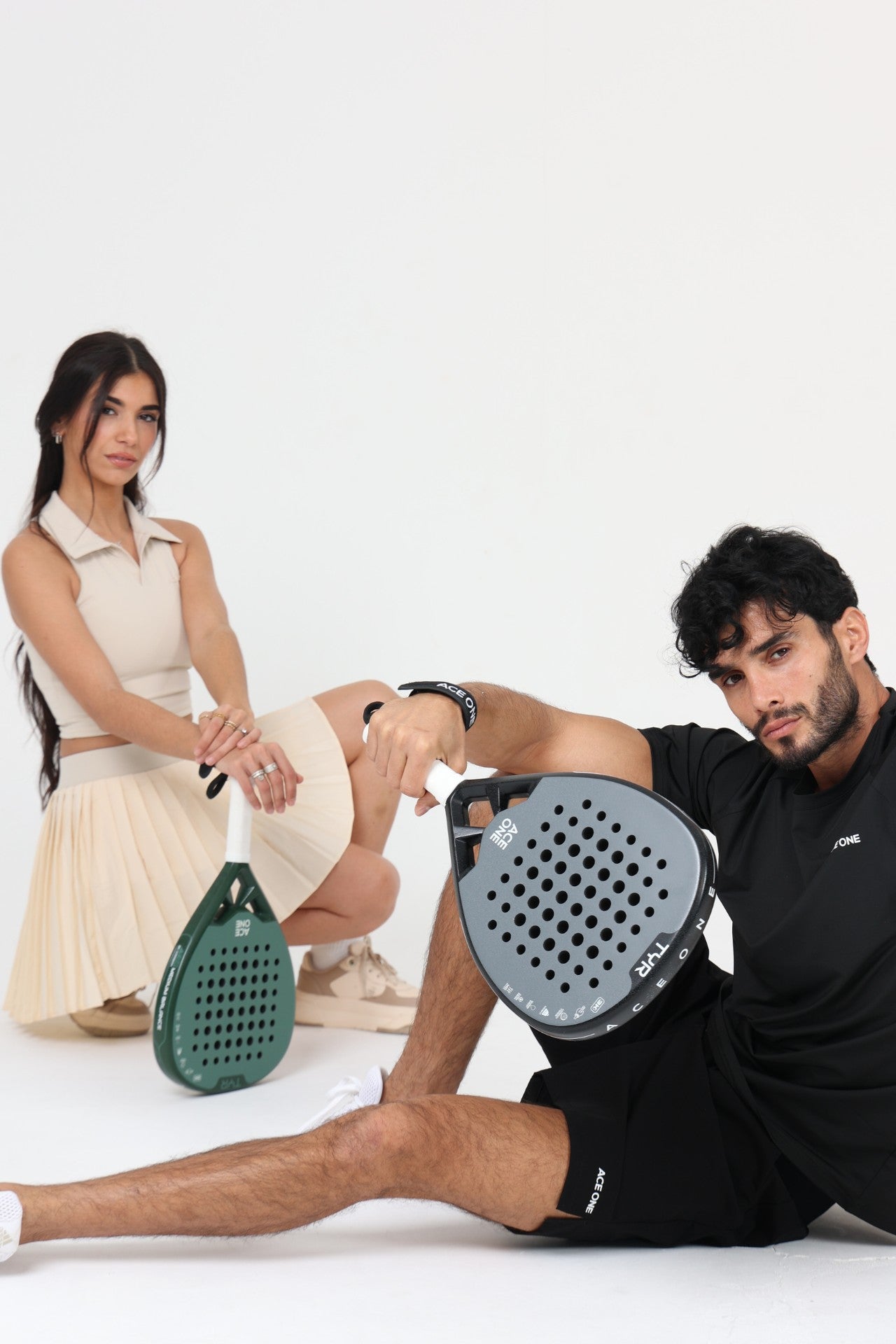
Watch anyone walk onto a padel court for the first time, especially if they come from tennis, and you will see the same reflex. A ball floats toward the back glass, the new player panics, lunges, and swats at it before it can reach the wall. The ball flies long, or dribbles into the net, and they shake their head as if the court itself cheated them.
Here is the truth that takes most beginners far too long to learn. In padel the back wall is not out. It is your second chance. Playing the walls in padel is the single skill that separates someone who is hitting a green ball from someone who is actually playing the sport. Once the glass becomes a teammate instead of a threat, the whole game slows down and opens up.
TL;DR
- The wall is not out: a ball that bounces on your floor first is fully in play after it rebounds off your back or side glass.
- Floor first, always: if the ball reaches the glass or fence before it bounces on the ground, the point goes to the team that hit it.
- Let it come: stop attacking the ball on the rise. The rebound buys you a full second to reset.
- Stand side-on: turn your shoulder to the glass, leave a forearm of space, and hit in front of your body.
- Gear helps: a control racket with a softer feel makes the timing forgiving while you learn the bounce.
Floor first, then glass: the one rule that changes everything
Every confusion about the walls disappears once you internalise the bounce order. In padel the ball must hit the floor before it touches any wall or fence on your side. That is the rule the whole sport hangs on.
So when an opponent's shot crosses the net, one of two things happens. Either it bounces on your court and then carries into the glass, in which case you are free to let it rebound and play it, or it flies straight into the glass without bouncing on the floor first, in which case the point is already yours. According to the International Padel Federation rules, a ball that strikes the wall before the ground has not been correctly returned, and the side that hit it loses the point.
That single fact rewrites your instincts. The ball heading for the back glass at chest height is not a crisis. It is an invitation to wait.
What is in and what is out
A few edge cases trip up new players, so keep these straight:
- Ball bounces, then hits your glass: in play. Return it before it bounces on the floor a second time.
- Ball hits your glass before bouncing: point for the other team. The floor must come first.
- Your own return touches your own walls after you hit it: out. Your reply has to clear the net without grazing your own glass on the way.
- On a serve: the rules are stricter. After the serve bounces in the box it may touch the back glass, but if it then hits the metal fence it is a fault, as the LTA's official rules summary spells out.
Why the back wall is your friend, not your enemy
Tennis trains you to take the ball early and end the point. Padel rewards the opposite patience. When a deep ball is dropping toward your back glass, the worst thing you can do is reach back and stab at it on the rise. You have no balance, no power, and no margin.
Let it pass you instead. The ball bounces, climbs into the glass, loses a chunk of its speed, and comes back out at a friendlier height and a slower pace. Now you are facing a soft, predictable ball with your body set and the net in front of you. That is the second chance the wall gives you for free.
This mindset shift, from "the ball got behind me so I lost" to "the ball got behind me so I have time", is the real beginner breakthrough. It is also the clearest line between padel and its racket cousins, something we broke down in our guide to the differences between padel and tennis.
How to play a back-glass ball, step by step
Here is the move, built for a right-handed player defending a ball heading to the back wall. Flip it if you are left-handed.
- Turn and travel. As soon as you read the deep ball, turn your shoulder to the glass and move back with small adjusting steps. Face the side glass, never your back.
- Leave space. Settle around 30 to 50 cm off the wall, roughly a forearm's length. Too close and the rebound jams you. Too far and you cannot reach it cleanly.
- Let it come. Watch the ball pass, hit the floor, and climb into the glass. Do not chase it. The wall does the work.
- Open the face. Tilt the racket face slightly up so the ball gets enough lift to clear the net on the way back. A flat face sends it low into the tape.
- Hit in front. Contact the ball as it drops out of the glass, in front of your body, near the top of its rebound. Push it back deep and high rather than trying to crush it.
- Recover forward. The shot buys you time to move back toward the net, which is where padel points are won.

The fastest way to make all of this click is to compare the beginner instinct against the correct response, point by point.
| Situation | Beginner instinct (costs the point) | Correct wall play |
|---|---|---|
| Deep ball to the back glass | Swat at it early before the bounce | Let it bounce, then play the rebound |
| Body position | Stand flat, back to the wall | Turn side-on, shoulder to the glass |
| Distance from glass | Pressed against the wall | A forearm of space, around 30 to 50 cm |
| Racket face | Flat, ball dies in the net | Slightly open for lift over the net |
| Goal of the shot | Win the point with power | Reset deep and high, then move up |
Side glass, double glass, and the gate
Once the back wall feels normal, the side glass is the next layer. The same rule applies. The ball bounces on the floor, then can rebound off the side glass, and you play it. When a ball clips the side wall and then the back wall, players call it a double glass, and it just means you read two rebounds instead of one. Stay patient and the second bounce off the wall is often slower and easier than the first.
There is also the spectacular stuff you see on the pro tour, like the out-of-court return, where a player chases a ball through the side opening and plays it back in. You do not need that yet. What helps now is the contrapared, a defensive shot where you hit the ball back into your own glass on purpose when you are jammed. For the moment, simply trust the rebound, much like the patience we preach for the bandeja you will hit once you have reset the point.
Drills and gear to build wall confidence
Confidence off the glass is built, not bought, but the right racket shortens the learning curve. Three simple habits will get you there fast:
- The feed drill: stand near the back glass and have a partner throw balls into the wall at different heights. No racket at first. Just learn how the rebound moves.
- Shadow the bounce: add the racket and only push the ball back deep. No winners. Twenty in a row before you allow yourself a target.
- Count to one: say "one" out loud as the ball passes you. It forces the pause that stops the early swat.
On the gear side, wall defense rewards feel over raw power. A softer, control-oriented racket gives you a longer contact and more margin when your timing is half a beat off, which is exactly where beginners live. That is the whole design idea behind our TŸR control rackets, built around a 3K carbon face and a soft EVA core for tolerance and dwell. The Cøre 12K, by contrast, is the rigid power tool for players who already generate their own pace. For learning the walls, comfort and control win every time.

The Ace One Padel Verdict
At Ace One Padel, we have watched hundreds of beginners turn the corner, and it almost always happens on the day they stop fearing the back wall. Playing the walls in padel is not an advanced trick. It is the foundation. Learn the bounce order, let the ball come, turn side-on, and reset deep. The glass was never your enemy. It is the part of the court that gives you time, and time is everything in padel. Get a control racket that forgives your timing, then let a hundred balls rebound past you until the panic turns into patience.
Frequently asked questions
Is the back wall out in padel?
No. As long as the ball bounces on the floor first, it can rebound off your back or side glass and stay in play. You simply return it before it bounces on the floor a second time.
Can you hit the ball before it comes off the wall?
Yes, you are allowed to take it out of the air before the rebound, but as a beginner you usually should not. Letting the ball come off the glass slows it down and gives you time to set up a controlled reply.
Can the ball hit the fence and still be in play?
During a rally, yes. After the ball bounces on the floor it may touch the glass or the metal fence and remain in play. On a serve it is stricter: after the bounce the ball may touch the back glass but not the fence, which is a fault.
How far should I stand from the glass?
Around 30 to 50 cm, roughly a forearm's length. Close enough to control the angle, far enough that the rebound does not jam your swing.
What racket is best for learning wall play?
A control-oriented racket with a soft core, like the Ace One Padel TŸR, gives more contact time and margin, which makes back-glass timing far more forgiving than a stiff power racket.
Share:
The Padel Chiquita: How the Slowest Shot in the Game Wins You the Net (2026 Guide)