
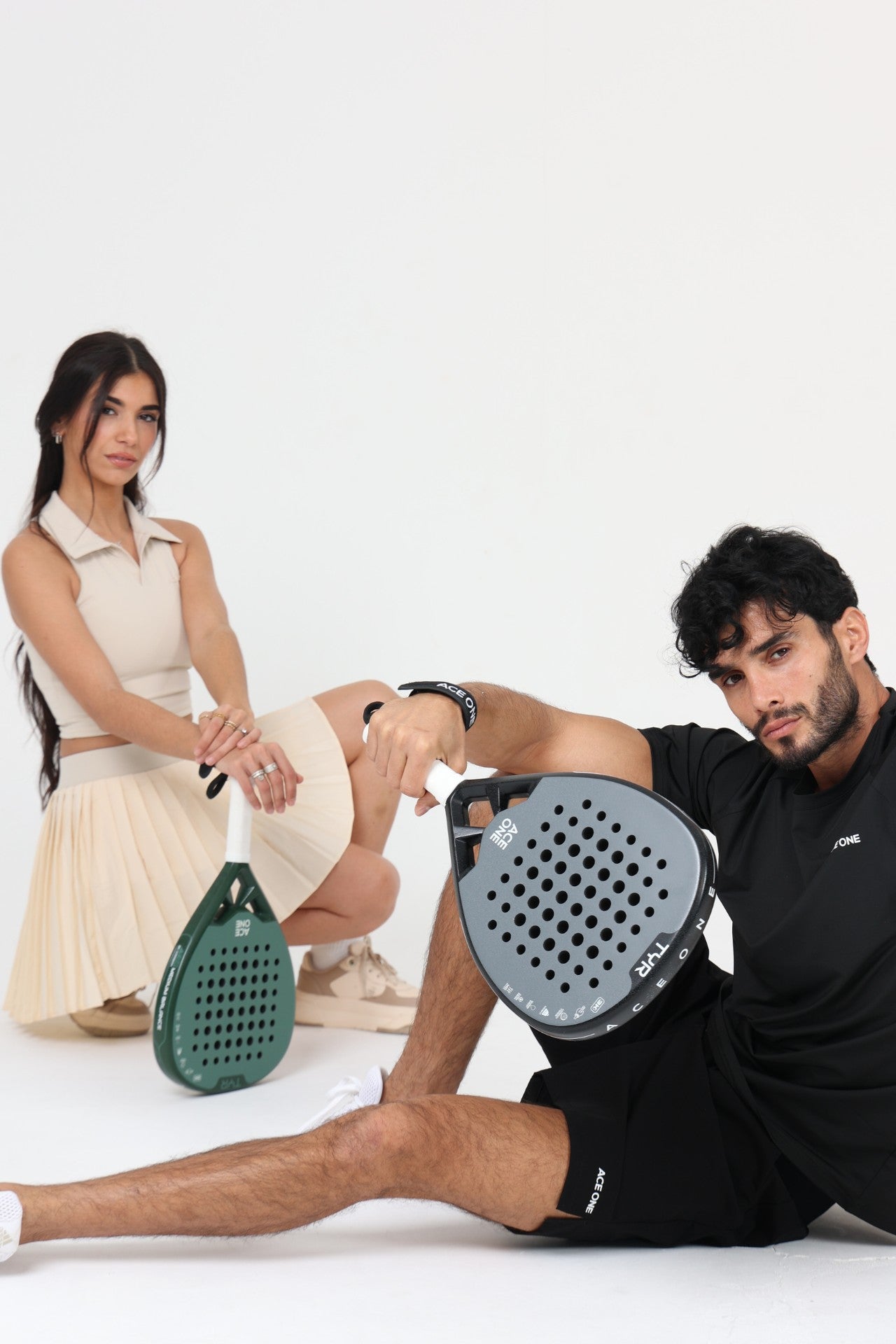
It was 4-1 at the start of the second set, with Federico Chingotto serving for what looked like a routine break consolidation, when something quiet happened in Buenos Aires. Agustín Tapia, the world number one alongside Arturo Coello, took a half-step back from the net. He drifted. Not because he had read a lob, but because he had already accepted that the lob was coming, and that the next lob would come too, and the one after that. The Mary Terán de Weiss centre court did not get louder. It got hushed. Because the 16,920 spectators packed into the Buenos Aires Premier Padel P1 final understood, three games before the trophy lift, that they were watching a 6-2, 6-1 dismantling of the men who have held the world number one ranking since the 2026 season opened.
TL;DR
- Final score: Galán and Chingotto defeated Coello and Tapia 6-2, 6-1 in 78 minutes. Second-most lopsided result these two pairs have produced, behind only the 6-1, 6-1 of 2024 Genoa.
- How they did it: 4-1 head-to-head in 2026, third consecutive P1 final win over Coello and Tapia, executed by stretching the rallies, owning the lob, and refusing to play the power game that suits the number ones.
- Race 2026 update: Galán and Chingotto move to 4,670 points. Coello and Tapia at 3,880. Gap widens to 790 points, the largest of the season and a clear signal that the number one ranking is in play before Rome.
- Women's final: Paula Josemaría and Bea González defeated Gemma Triay and Delfi Brea 6-3, 7-5 to extend a 19-match winning streak and reopen the women's number one race.
- What comes next: BNL Italy Major in Rome, 31 May to 7 June at the Foro Italico. First Major of the year, double points, the moment where 790 points becomes either a footnote or a coronation.
The 6-2, 6-1 that nobody predicted
Coello and Tapia arrived in Buenos Aires as defending world number ones, fresh off semifinal runs in Asunción, with a 2026 head-to-head against Galán and Chingotto sitting at 1-3. That last figure was the warning the bookmakers ignored. Tournament odds opened with the number ones as slight favourites in their backyard, anchored by Tapia's Argentine roots and Coello's all-court ceiling. The first three games of the men's final argued for that opening line. The next eleven argued for the bin.
Chingotto broke first at 2-1 in the first set. Galán broke again at 4-2 with a topspin lob that died on the second bounce, a centimetre from the back glass, the kind of shot that does not appear in the highlights reel because no opponent ever finds an answer to it. By the time the players changed sides at 5-2, the rhythm was set. Coello and Tapia did what world number ones do when they are losing: they swung harder. The harder they swung, the deeper Galán and Chingotto sat. The deeper they sat, the more the rallies lengthened. The more the rallies lengthened, the more the lob became the dominant shot of the match. By the end, the lob was not a defensive tool. The lob was the rally.

The second set was worse. Tapia hit a forehand long at 0-2, the kind of unforced error he produces twice a tournament, and the body language shifted. Coello started taking the bandeja from positions where the víbora was the textbook choice. Tapia stopped attacking the middle. By 5-1, the venue knew. The match ended on a Coello backhand into the net, 78 minutes after it started. The scoreboard read 6-2, 6-1. The Race 2026 read something different.
The pattern Coello and Tapia cannot solve
This was the third consecutive P1 final loss for Coello and Tapia against Galán and Chingotto in 2026. Brussels in late April, Asunción two weeks ago, Buenos Aires today. The head-to-head reads 4-1 in 2026, with the only Coello-Tapia win coming on the Newgiza P2 final back in April. Three P1 finals in a row, three matches that never went to a deciding set, three matches where the pattern was identical and unsolved.
The pattern is not power against power. The pattern is structure against power. Galán and Chingotto refuse to enter the rally the number ones want. Where Coello-Tapia look to finish in four shots, Galán-Chingotto extend to twelve. Where Coello-Tapia want the smash, Galán-Chingotto deliver the lob. Where Tapia wants the body, Chingotto plays the foot. The Argentine left-hander has become the rhythm-setter of the tour: he is not the most powerful player on court, he is the one who decides what kind of point gets played.
The 790-point gap, and what it actually means
Before Buenos Aires, the Race 2026 leader gap was 270 points. A title and a runner-up swap was enough to flip it. After Buenos Aires, the gap is 790 points, the widest of the calendar year. Coello and Tapia still hold the official FIP number one ranking, because that ranking is computed on the rolling 52-week window and includes 2025 results that still favour them. The Race 2026 is the live competition, the points-this-season-only standing that decides who finishes 2026 as the top pair. Galán and Chingotto are now leading that race by a clearer margin than at any point since April.
What does 790 points buy? A single P1 win is worth 1,000 points to the winner, 700 to the finalist. A Major win is worth 1,500 points. The mathematics, then, is simple. If Coello and Tapia win Rome and Galán and Chingotto reach the semifinal, the gap closes to 230. If Galán and Chingotto win Rome and Coello and Tapia reach the semifinal, the gap blows out to 1,290. Rome is not a coronation event yet. Rome is the leverage event. The first Major of the year, worth more than any P1, where one weekend can erase or cement what April and May built.
The women's final and the 19-match streak nobody is talking about
While the men's final was finishing 6-2, 6-1, the women's final was finishing on a quieter line. Paula Josemaría and Bea González defeated Gemma Triay and Delfi Brea 6-3, 7-5, the third Premier Padel title for the Spanish pair in 2026, and the 19th consecutive match win in their current streak. That streak is the longest active winning run in either tour, men's or women's, and it has gone curiously underreported because the women's number one race never makes the front page of padel media.
It should. Triay and Brea sit at 4,200 Race 2026 points after the Buenos Aires final. Josemaría and González are at 3,750. The gap is 450 points, half what the men's gap is, and trending the wrong way for the leaders. Triay and Brea have lost three of their last four meetings with Josemaría-González. The women's tour is sliding toward the same shape as the men's: the ranked number ones are still ranked number one on paper, while the chasing pair is winning the matches that move the season.

Why the BNL Italy Major in Rome is the pivot point
The next event is not another P1. It is the BNL Italy Major Premier Padel, 31 May to 7 June at the Foro Italico in Rome, the first Major of the 2026 calendar. Majors are the heaviest events on the tour, worth 1,500 points to the winner against 1,000 for a P1, and they reset everything the regular season builds. The Foro Italico will host 49 of the FIP top 50 men and the entire women's top 50. Single tournament, full draw, double the leverage.
The narrative coming into Rome writes itself on three planks. Plank one: can Coello and Tapia restructure their game in 13 days to solve a problem that has held them to one win in five against Galán-Chingotto since January? Plank two: does the Lebrón-Augsburger pair, third in the Race at 2,110 points, jump into the title conversation, or do they remain the trip-up specialists who beat the number ones in a quarterfinal and lose to the second seeds in the semifinal? Plank three: can anyone outside the top three pairs win a Major in 2026, or has the tour quietly become a three-pair sport at the top?
The honest answer to plank three is no, not in 2026. The Race 2026 top four are now separated by 2,930 points from the fifth pair. The gap between the number one pair and the number four pair is smaller than the gap between number four and number five. The 2026 men's tour has consolidated into a top-four oligarchy faster than any season since the Premier Padel format was created. Rome will either confirm that consolidation or open the first crack in it.
What the Buenos Aires final teaches an amateur
Pro analysis is interesting. Application is more interesting. There are three lessons the average club player can pull out of the 6-2, 6-1 dismantling, and none of them require playing like Galán or Chingotto. They require the opposite: they require playing your game more patiently than your opponent plays theirs.
- Lob is the answer to power, not the answer to lob. Coello and Tapia tried to escape the lob with a harder smash. The escape failed. When a partner facing power asks "how do we slow them down?", the answer is to make them hit one more shot, not to hit one bigger shot of your own. At amateur level, this means the partner closest to the net hits the safe defensive lob first, and the partner deeper resets. Two players cannot both go for the smash. One needs to be the patience.
- Position decides the shot. The lopsided second set happened because Coello stopped reading court position and started reading momentum. The bandeja became a víbora because frustration converted it. We have written about the 5-question shot selection framework for this reason. Galán-Chingotto never violated it. Coello-Tapia did, three times in the second set alone.
- The match is not won in the swing, it is won in the 1.4 seconds before the swing. Galán's kinetic chain was not faster than Coello's. It was earlier. He was set, balanced, and reading the bounce before the ball cleared the net. That is the gap between the world's third pair and the world's first pair this weekend. It is a gap of preparation time, not arm strength.
Kit notes: what pairs the Buenos Aires final to your bag
The TŸR 3K is not Galán's racket. The Cøre 12K is not Tapia's racket. But the framework that decided this final transfers cleanly to amateur kit choice. The control-and-patience pair wins when the defender has a forgiving frame and the attacker has a frame that punishes mistakes. The pair that swings harder when frustrated loses when their rackets amplify the error rather than absorb it.
- If you are the defender, the patient one, the lob-merchant of your pair: a 3K carbon frame with a Soft EVA core is your tool. Longer dwell, better placement, lower error rate under pressure. The full lineup lives in the TŸR collection.
- If you are the finisher, the smash-merchant, the player who wants the ball to die at the back fence: a 12K rigid carbon frame finishes what your defender sets up. Power comes from racket stiffness plus your kinetic chain, not from hitting harder. The Cøre 12K Carbon is the matched tool.
- If you are a new pair still figuring out which role is whose: the Pack Performance bundle ships the Cøre 12K, three PRO-LINE overgrips, and the kit bag, enough to play your first tournament without buying anything extra.
- If you are tuning grip thickness to match how loose or tight you hold the racket under pressure: the PRO-LINE perforated overgrips are the dial. We covered grip tuning logic in our grip size guide.
The cluster of "what to buy" articles built up around the racket selection master guide and the 3K vs 12K weave explainer covers the rest of the kit decision tree. None of those decisions require pro-tour data. All of them benefit from the framework that pro-tour data validates.
The Ace One Padel Verdict
Galán and Chingotto did not beat Coello and Tapia 6-2, 6-1 because they hit harder. They did it because they refused to play the match Coello and Tapia wanted to play. The Race 2026 gap is 790 points and growing. The first Major of the year is in 13 days at the Foro Italico in Rome. The women's tour is following the same shape, with Josemaría and González on a 19-match streak that the headlines are still ignoring. The number ones are still the number ones, on paper. On the court, somebody else is winning the season.
The score was 6-2, 6-1. The story is 790. The next chapter is Rome.
Share:
How a Padel Swing Actually Works: The Kinetic Chain From Feet to Racket Face (2026 Biomechanics Guide)
How to Onboard a New Padel Partner: The 90-Day Pair Calibration Plan (2026 Guide)