
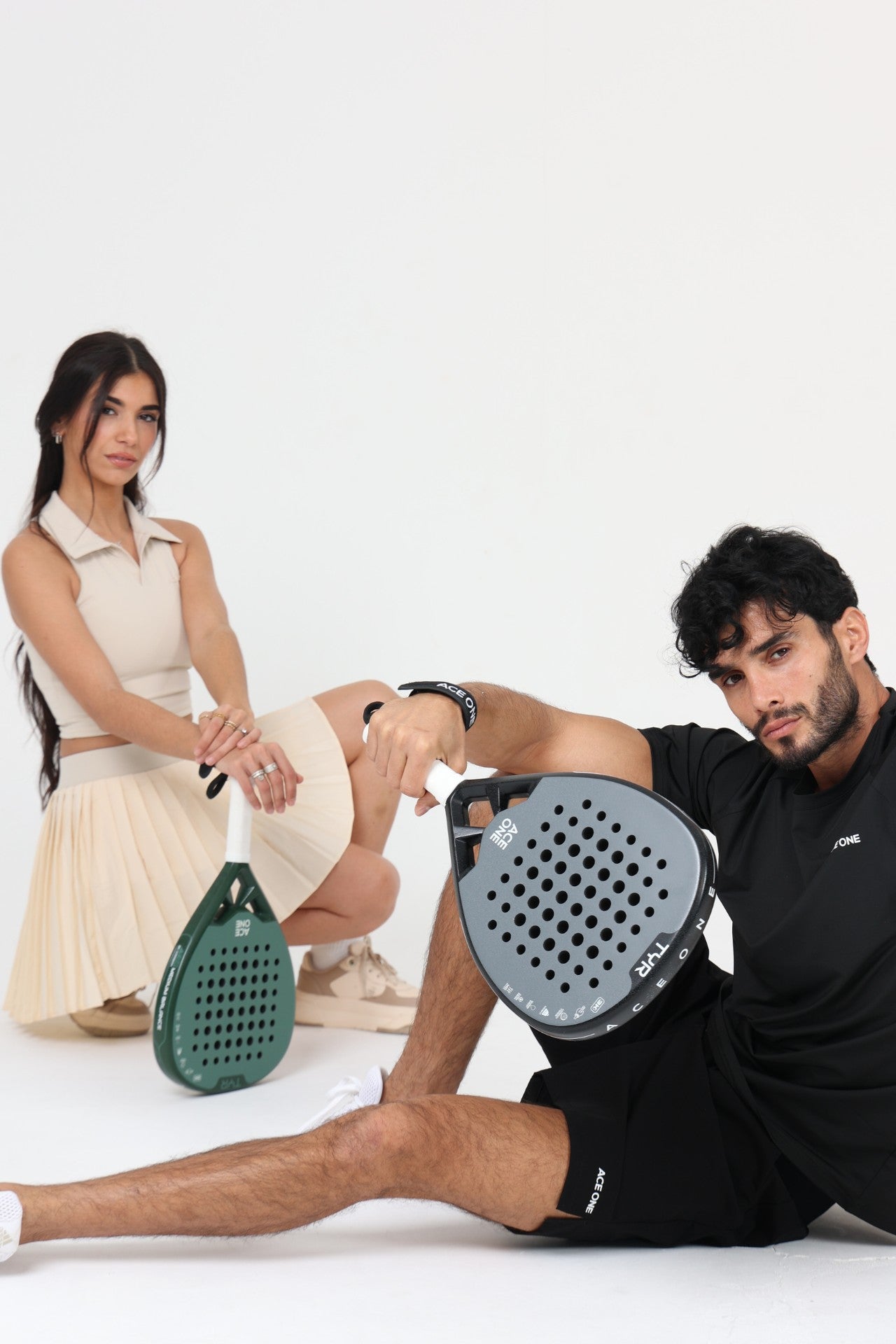
Here is a number that should change how you play padel: more than 80% of points are won at the net. Now the strange part. The fastest way to reach that net is not to hit harder, it is to hit softer. Much softer. The shot is called the chiquita, and it is the most aggressive soft ball in the game.
The big idea is simple. The padel chiquita trades pace for position. You give up power on purpose, because the prize is not the winner. The prize is the net, and in padel the net wins almost everything.
TL;DR
- What it is: a soft, low, topspin ball played from the back of the court that dips onto the net player's feet.
- Why it works: it forces a low volley up, which buys you time to move forward and steal the net.
- The stakes: in professional padel more than 80% of points are won at the net, so the shot that earns you the net earns you the match.
- How to hit it: continental grip, racket below the ball, short low-to-high brush, contact in front, then sprint in.
- The one rule: slow is the point. Hit it too hard and you have just fed the net player a snack.
What a chiquita actually is (and what it is not)
Chiquita is Spanish for "little one", and the name is the whole tactic. It is a controlled groundstroke played from behind the service line, sent low over the net with topspin so it drops sharply onto the feet of the players controlling the net.
It is not a winner. It is not meant to pass anyone or paint a line. Its only job is to be uncomfortable. A net player loves a ball at chest height and hates a ball at the shoelaces, because a low ball can only be lifted, never crushed.
It is also not a lob. A lob goes up and over to push opponents back. A chiquita goes low and through to pull them down. Both are transition shots, two doors out of the same defensive room, and the best players keep you guessing which one is coming.
Why a soft shot is your most aggressive weapon
This is the part that flips most amateurs' instincts. In padel, the team standing at the net is the team in charge, and the numbers are not close.
Analysing 2,107 rallies from professional World Padel Tour matches, Courel-Ibanez and colleagues (2015) found that more than 80% of points are won from the net, and that winning pairs score 34% more points and make 49% fewer unforced errors there than the pairs they beat. Later match analysis put the figure at 82.7% of winning shots struck from the net. The systematic review of padel performance reaches the same verdict: occupying and holding the net is the single clearest marker of the winning team.
Now connect the dots. If the net wins roughly four points in five, then any shot that pries the opponents off the net and lets you take their place is worth far more than a flashy winner attempt that misses one time in three. The chiquita is exactly that shot. It does not score the point. It moves you into the zone where the point gets scored.
How to hit a chiquita, step by step
The mechanics are compact and repeatable. There is no big swing here, which is why it is a great shot to drill until it is automatic.
- Set a continental grip. The same neutral grip you use at the net gives you the touch and the topspin window the chiquita needs.
- Get low and load. Bend the knees, drop your weight, and turn your side to the net. The chiquita is played from a stable, crouched base, not on the run.
- Start the racket below the ball. Contact happens in front of your body, around knee to waist height. Behind you, the ball floats up and becomes a gift.
- Brush low to high. A short, soft, upward brush over the back of the ball creates the topspin that makes it dip after it crosses the net. Think lift, not push.
- Follow your shot in. The instant the ball leaves your strings, move forward. The chiquita only pays off if you are arriving at the net while they are digging at their feet.
The trajectory is the signature. A good chiquita barely clears the net, then drops off a cliff toward the feet thanks to the topspin. Picture the flight path before you picture the swing.
Touch shots live and die on feel, and feel comes from the racket. This is why we tend to reach for a softer setup when we coach the chiquita. A 3K carbon frame with a Soft EVA core, like our TŸR, holds the ball on the strings a fraction longer, and that extra dwell time is exactly what lets you brush up and shape the dip instead of slapping the ball flat.

Chiquita or lob? Picking your transition tool
Both shots solve the same problem, which is being stuck at the back while the other pair dictates. The difference is the door you choose, and good players mix them so the net team can never set their feet.
| Situation | Play the chiquita | Play the lob |
|---|---|---|
| Ball height | Comfortable, knee to waist | Low or awkward, hard to lift fast |
| Opponents' position | Tight to the net, feet split | Crowding the net, no overhead set |
| Wind / indoor | Calm, predictable bounce | Wind makes a low pass risky |
| Goal | Force a low volley up, then advance | Push them back, reset the rally |
| Main risk | Sitting up if hit too hard or too high | Short lob smashed for a winner |
The honest caveat: the chiquita asks more of your hands than the lob does. Against a sharp net player who reads it early, a loose chiquita is a smash waiting to happen. Drill it before you trust it in a tight game, and pair it with the volley you will need the moment you arrive at the net.
The 3 mistakes that kill your chiquita
Almost every failed chiquita comes down to one of three errors. Fix these and the shot starts paying rent.
- Mistake 1: hitting it too hard. Pace is the one thing that ruins this shot. A fast ball arrives before it can dip, sits up at a hittable height, and the net player thanks you. Slow is not a compromise here. Slow is the weapon.
- Mistake 2: the wrong contact point. Too far behind you and the ball balloons up into an easy volley. Too far forward and you net it. Meet it in front, low, with the racket face already climbing.
- Mistake 3: admiring your shot. A perfect chiquita with no follow-up is a wasted ticket. You bought time to advance, so spend it. If you stay glued to the baseline, you have done all the work and collected none of the reward.
The Ace One Padel Verdict
At Ace One Padel, we have broken down enough rallies to know the truth about the chiquita: it is not a trick shot, it is a positioning tool wearing a disguise. It will not light up a highlight reel. It will quietly hand you the most valuable real estate on the court, over and over, in the matches that actually count.
So stop trying to blast your way out of the back. The data is blunt about it. The net wins the points, and the softest shot in the game is the cheapest way in. Hit it slow. Make it dip. Then run.
Ready to build the touch that makes it work? Explore the control-first frames in the Ace One Padel rackets collection and put more dwell time on your side.
Chiquita FAQ
What does chiquita mean in padel?
It is Spanish for "little one". The name describes the shot: a small, soft, low ball played to the opponents' feet to break their control of the net.
Is the chiquita an attacking or defensive shot?
Both. You play it from a defensive position at the back, but its intent is aggressive. It is designed to force a weak volley and let you take over the net.
What grip should I use for a chiquita?
A continental grip. It gives you the control and the low-to-high topspin window the shot needs, and it is the same grip you already use at the net.
Why does my chiquita keep sitting up for an easy smash?
Almost always too much pace or a contact point too far behind you. Slow the swing down and meet the ball in front of your body at knee to waist height.
Chiquita or lob, which should I learn first?
Most players find the lob more forgiving to start. Add the chiquita once your hands are steady, then alternate the two so net players can never predict your transition.
Share:
Padel Racket Balance Explained: Head-Heavy vs Even vs Head-Light (2026 Guide)
Playing the Walls in Padel: A Beginner’s Guide to the Back Glass