
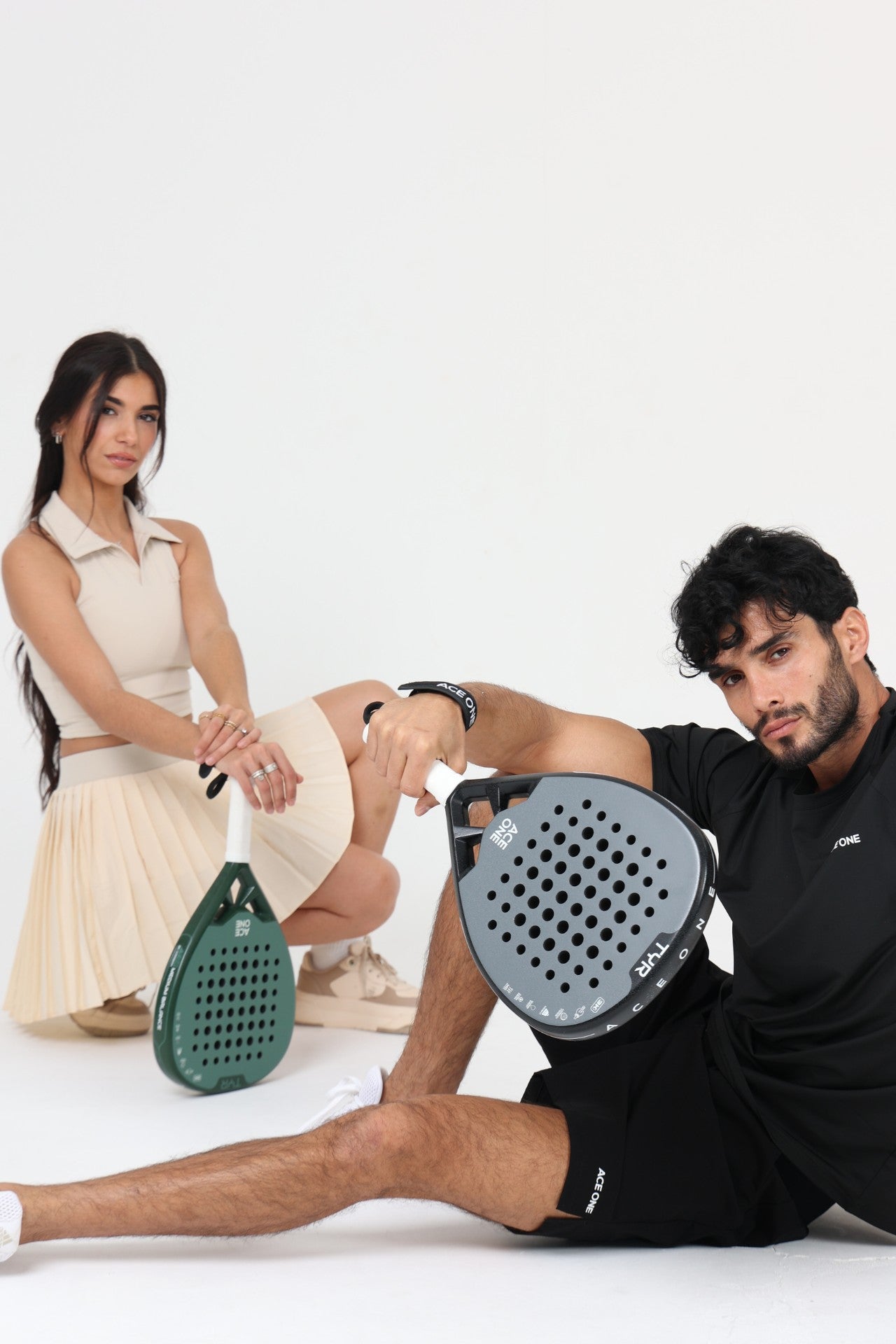
Your men's padel outfit will not win you a single point directly. What it will do is decide how the small in-between moments actually feel: the split-step before a smash, the sprint to the net, the fifth rally of a ten-minute game. Get the outfit wrong and those moments feel like laundry day. Get it right and you stop thinking about your clothes at all, which is the entire point.
TL;DR
- Fabric first: cotton absorbs sweat and gets heavy, technical polyester-elastane blends wick it away and dry fast. This one swap matters more than any logo.
- Fit second: room to lunge and rotate beats looking sharp. Too tight restricts your split-step, too baggy catches wind and slows your recovery.
- Dress for minute one: padel heats up fast once the rallies start, so dress for the cold first ten minutes, not the sweaty last ten.
- Sun is real: an outdoor match can mean 60 to 90 minutes of direct exposure. A light technical layer beats reapplying sunscreen mid-set.
- You need less than you think: two technical tees and two shorts in rotation cover most players' actual weekly needs.
The Two Things a Men's Padel Outfit Actually Needs to Get Right
Strip away the colours and the branding and a men's padel outfit only has two variables that matter for how you actually play: what the fabric does to sweat, and how much the cut lets your body move.
That sounds obvious, but most players still shop for padel clothes the way they shop for a t-shirt to wear to brunch: fit the eye, not the movement. A padel match asks a lot more of a garment than a normal Tuesday does. Our own breakdown of the sport's physical load found roughly 1,100 brake-and-go actions and around 3,440 metres covered in a single match, most of it in short, sharp bursts rather than steady running. That is a lot of stopping, twisting and reaching for one t-shirt to survive comfortably.
Once you accept that a padel outfit has a job to do, not just a look to hold, the fabric and the fit stop being style questions and become performance questions. The rest of this guide is built around answering those two questions properly, then applying the answer to what you actually wear from a cold Tuesday morning to a sun-baked Saturday afternoon.
Fabric First: Why Cotton Loses on a Padel Court
Cotton is comfortable on the sofa because it absorbs moisture and holds onto it. That is precisely the problem on court. Textile testing consistently shows cotton retaining many times more water than polyester, which typically absorbs under 1% of its own weight. Once a cotton shirt is wet, it stays wet, gets heavier, and clings to your skin for the rest of the set.
Technical fabrics built from polyester and elastane blends work the opposite way. They pull sweat away from the skin through capillary action and spread it across the fabric's outer surface, where it is exposed to air and evaporates quickly. This process, generally called moisture management or moisture-wicking, is one of the main reasons technical sportswear feels dry even mid-rally while a cotton tee feels soaked by set two.
The practical effect is not subtle. A dry, lightweight shirt lets your arms move freely on an overhead smash. A heavy, sweat-soaked one adds drag on every swing and cools unevenly against your skin, which is exactly the kind of small distraction that costs you focus on the point that matters.

| Cotton T-Shirt | Technical Poly-Elastane Blend | |
|---|---|---|
| Moisture handling | Absorbs and holds sweat | Wicks sweat to the surface to evaporate |
| Weight when wet | Noticeably heavier | Stays close to its dry weight |
| Dry time between points | Slow, stays damp | Fast, surface dries between games |
| Stretch and range of motion | Minimal, resists movement when wet | Four-way stretch follows the swing |
| Odor build-up over a season | Faster, moisture stays trapped | Slower with regular washing |
| Best for | Watching from the bar, not playing | Actually being on court |
Fit: Loose Enough to Move, Tight Enough Not to Flap
Fabric handles the sweat. Fit handles the movement, and it is just as easy to get wrong in either direction.
Four-way stretch construction, where the fabric extends in multiple directions and recovers its shape, is what lets a shirt or short follow a lunge, a twist, or a full overhead reach without pulling or riding up. Garments cut this way are built specifically to accommodate multi-directional movement rather than the single-direction stretch of an older-style gym tee.
The mistake most men make is picking one extreme. Full compression gear head to toe looks sporty but can restrict the natural rotation your torso needs on a smash. Oversized, baggy fits look relaxed but catch air on every sprint and take longer to dry once they are wet, since more loose fabric means more surface area holding moisture against your skin.
The middle ground, a fitted but not compressive cut with real stretch built in, is what actually disappears once you start playing. You should be able to reach for an overhead volley without feeling your shirt pull across your shoulders, and sprint to the net without your shorts riding up or flapping loose.
Dressing for Real Conditions, Not Just for the Court
The same outfit does not work for an 8am winter session and a 2pm July match, and treating them the same is one of the most common wardrobe mistakes on any padel calendar.
Indoor clubs run climate-controlled, so a single technical layer usually covers the whole session. Outdoor courts are a different problem entirely. A match can run 60 to 90 minutes under direct sun, which is real, sustained UV exposure, not a quick walk to the car. A lightweight technical tee with some UV coverage does more for you over a full match than a coat of sunscreen you will not remember to reapply at 5-4 in the second set.
Cool mornings need the opposite adjustment. Padel takes a few minutes to heat the body up properly, so a thin technical layer you can peel off after the warm-up beats either freezing through the first game or overheating in a jumper you forgot to remove. Dress for the first ten minutes, not the last ten, and adjust from there.

The same instinct that trips players up with layering also shows up in four common wardrobe mistakes worth naming directly. The cotton gym tee trap: comfortable at home, soaked and heavy by the second set, exactly the fabric problem above in one garment. The basketball-shorts trap: extra fabric feels relaxed standing still, but it catches wind mid-sprint and adds drag on every split-step. The full-compression trap: skin-tight from neck to ankle looks committed, but restricting your torso's natural rotation can cost you reach on an overhead smash. And the one-outfit-for-everything trap: wearing the same kit for an 8am cold court and a 2pm sun-baked one means you are either underdressed for one or overheating in the other.
From the Wardrobe to the Court: What We Built Into Ace One's Activewear
At Ace One Padel, we've built our men's activewear around exactly the two questions this guide keeps coming back to. The Men's Activewear T-shirt and Men's Activewear Short are cut from a polyester-elastane blend with four-way stretch, not cotton dressed up in sporty colours, so the fabric does the wicking work while the fit follows your lunge instead of fighting it.
Neither piece is trying to be the loudest thing on court. That is deliberate. A men's padel outfit that disappears into the background of your game, rather than announcing itself, is doing exactly what it is supposed to do.
Browse the full men's activewear collection, and if you are kitting out a partner too, our women's padel layering guide covers the same fabric logic from a different angle.
Quick Answers
What fabric is best for padel?
A polyester and elastane blend. Polyester wicks sweat away from the skin and dries fast, elastane adds the stretch needed for lunges, twists and overhead swings. Cotton absorbs and holds moisture instead of moving it away.
Should padel shorts be tight or loose?
Neither extreme. A fitted, non-compressive cut with four-way stretch gives you full range of motion without the extra fabric of a baggy short catching wind or slowing your split-step.
Can I just wear regular gym clothes for padel?
Technical gym clothes with moisture-wicking fabric work fine. The issue is specifically cotton gym wear, which behaves the same badly on a padel court as it does in any other sweaty, stop-start sport.
What should I wear for outdoor padel in summer?
A lightweight technical tee with UV coverage. A 60 to 90 minute match under direct sun is real exposure, and a light technical layer holds up better across a full match than sunscreen you will not reapply mid-set.
The Ace One Padel Verdict
A men's padel outfit comes down to two mechanical questions: what the fabric does with sweat, and how far the cut lets you move. Colour, logo, brand, all of that is preference layered on top.
Get the polyester-elastane blend right and the four-way stretch fit right, and you will notice the outfit has done its job in the best possible way: you will not think about it once, from the warm-up to the last point of the third set.
For more on why padel puts this much strain on a body and its wardrobe in the first place, see our breakdown of how physically demanding padel really is, and for the pre-match routine that pairs with the right kit, our 12-minute warm-up guide. For the textile science behind wicking fabrics, see Wikipedia's overview of moisture management and REI's expert guide to moisture-wicking fabric.
Share:
Málaga P1 2026 Recap: Coello and Tapia Make It Five Straight, Triay and Brea End Their Losing Run
Is Your Padel Racket Cracked? How to Tell When It Is Actually Broken (2026 Guide)